Posts

Database Replication and Software features

Image
Database replication is the activity of continual electronic copying of data from one database in a computer or server to another database in a separate location. This recurrent copying enables all users to have the same level of information at all times without interfering in each other’s work. The whole process is carried out through specific software which supports data security, disaster resilience, and business continuity. Data replication software helps to rapidly create a data replica at a location that is independent of the source of the data. It provides centralized management of replication policy across diverse data sources and targets. This is quite different from conventional data backups which retain one unchanged copy over an extended period. Replication, on the other hand, continually updates data and ensures consistency for end-users accessing multiple data stores in the normal course of business. There are several other features of data replication software. Zero...

A Short Overview of a Fully Managed Data Warehouse Tool

Image
What tool would you use if you want a fast, fully managed data warehouse that makes it easy and convenient as well as cost-effective to analyze all standard data using SQL and your existing Business Intelligence (BI)? It is Amazon Redshift which allows users to run complex analytic queries against petabytes of structured data, using cutting-edge query optimization, storage on high-performance local disks and massive parallel query execution.  Businesses can start on any scale with Redshift, from $0.25 per hour without any commitments and move on to petabytes of data for $1,000 per terabyte per year at a tenth of the expenses of traditional solutions. Amazon Redshift also includes Amazon Redshift Spectrum which helps to run SQL queries against exabytes of unstructured data in Amazon S3.  Conventional data warehouses need large amounts of time and resources to administer. Additionally, the financial cost of building, maintaining, and growing self-managed, on-premise data ware...

Snowflake Database Replication and Failover

Image
In today’s digital business environment, systems have to be available round the clock and even a few minutes of Internet outage can lead to colossal losses. For critical sectors such as healthcare, technology, and finance, it is important to have the infrastructure in place that will ensure quick recovery of data. Often Government and corporate mandates require the availability of speedy recovery procedures as part of compliance processes. Though most businesses have plans in place for continuity and disaster recovery, completely restoring data and systems after a crash can take a long time, resulting in massive setbacks for enterprises. To tide over this issue and meet such challenges, Snowflake has announced Snowflake Database Replication and Snowflake Database Failover. These assure high availability and quick data recovery regardless of which cloud provider the business operates in.  Replication to Snowflake offers instant access to data in the event of an outage. Snowflak...

Real Time Database Replication for Increased Business Efficiencies

Image
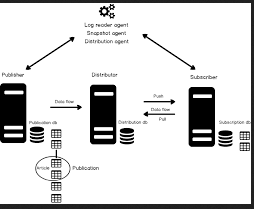
Massive amounts of data are generated by modern businesses today with constant challenges to keep data online and accessible 24x7. Thus there is a need for a system to maintain, store, and manage data along with replacing old and outdated data. Of all the possibilities available today, SQL Server Replication is best placed to accommodate all these demands. SQL Server Replication copies and distributes data and database from one source to another. When this is programmed to run constantly it is SQL real-time replication of data. Apart from it, systems can be set to process and copy databases at fixed pre-decided intervals. There are several replication techniques such as one-way, one-to-many, many-to-one, and bi-directional, all of which leads to datasets being in sync with each other. One of the key tools for real-time database replication is transactional replication. In this method, data is copied from the publisher to one or more subscribers once and thereafter, transactions ar...

An Introduction to Database Replication

Image
The volumes of data generated by businesses today are massive. IT departments are expected to ensure that this data is online and accessible indefinitely, thereby putting immense pressure on the data management process. The need then is to replace outdated and inefficient legacy processes through agile and new techniques. SQL Server Replication is the most used technique to achieve this goal. But first – what is SQL Server Replication? It is a technology for copying and distributing objects from one database to another after which the databases are synchronized to maintain integrity and consistency of data. Database replication SQL server is used for continuous copying and synchronizing data or scheduled to run at intervals that are determined from time to time. The data synchronization can be carried out in several ways as per the replication techniques deployed. Here are some of the techniques used for data replication. Snapshot replication – In this process, a “snapshot” is tak...

Data Replication and Integration

Replication is the process of duplicating and maintaining database objects in a range of databases that taken together make up a distributed database system. Once you make a change at one site, it is captured and stored locally and then forwarded and applied at every remote location. Oracle replication is not a separate server but a fully integrated feature of the Oracle server. The Internet has enabled extensive worldwide collaboration and information sharing of databases by extending the reach of database applications throughout communities and organizations. In the modern digital business environment, it is always business on the go, from any location, and round the clock. Without continuous access to data, customers will turn away, revenue will be lost, and penalties by regulatory authorities might be imposed. The Oracle database provides Oracle real time replication and integration features that are critical to the operation of any enterprise, regardless of the size and scale. T...